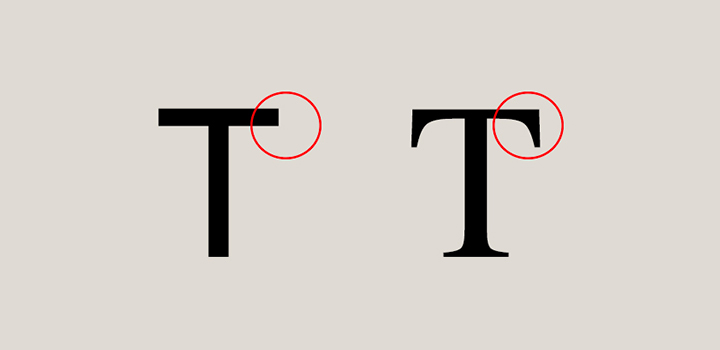
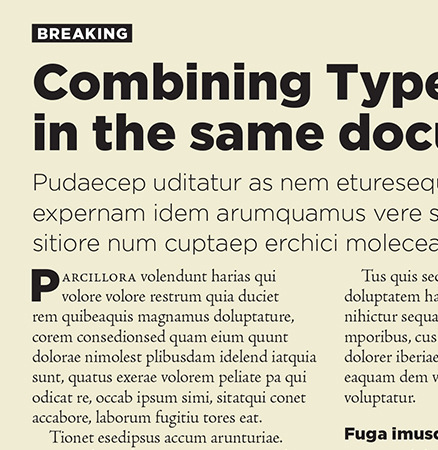
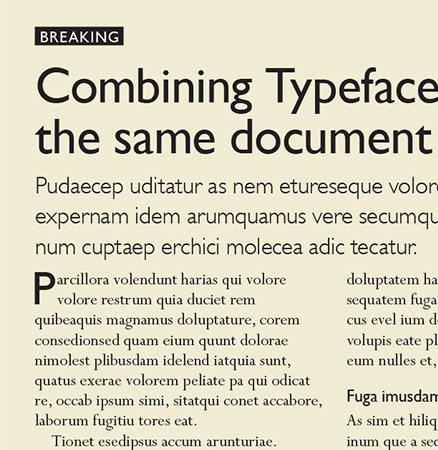
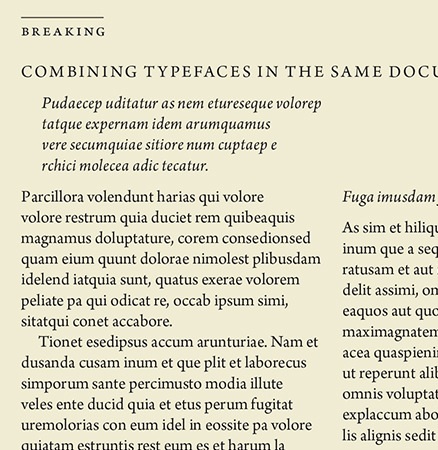
While some older writing is serif-free, such as Norse runes, sans serif fonts are mostly associated with modern typefaces. In 1928, Futura became one of the first popular sans serif fonts and other typefaces like Helvetica soon followed.
Sans serif typefaces were controversial when they first appeared and were sometimes called “grotesque” typefaces. But when modernist designers like the Bauhaus movement embraced sans serif typefaces, they became associated with cutting-edge design, commerce, and modernism’s attempt to break with the past.

That association still holds; for example, Todd uses sans serif for a comic book set in a contemporary, cosmopolitan, and fashion-oriented Los Angeles. However, sans serif typefaces can also evoke today’s handwriting, which is missing the extra strokes that were a product of the brush or quill. “The conventional wisdom is that sans serif fonts are supposed to mimic handwriting, which has more of a flow to it,” says Todd.
Sans serif fonts also work well where there’s very little room for copy. Signs, text in apps, and names on maps tend to be sans serif. (There are exceptions, of course. Some sans serif font families, like Arial, are meant to work as body copy — text that goes on for more than a sentence or two.)
“If you’re building an app or designing a site, sans serifs are generally the way to go,” says DeCotes, because legibility is a concern on screens that are small or have lower resolutions. She adds, “Sans serifs are for wayfinding or signage applications.” One of the most recognized fonts in the United States, Clearview, is a sans serif font. It was specifically designed for highway signs. Drivers needed to read a small amount of type from a long distance away and, in that instance, sans serif fit the bill.